For Celine (1995) was composed for my niece. It’s an early microcosm of my work. Happy birthday, Celine!
The slow opening section is based on a rising and falling figure in stacked fifths, layered in parallel sixths, and layered again in close canon with the second part a dotted quarter behind the first. Zigzag bass notes in this section return at the end.
The fast middle section presents a rhythmic variation of the stacked-fifth figure again in canon, this time with the second part two quarter notes behind the first, in a sequence that moves around the circle of fifths in A-flat major.
The final section includes short variations on earlier material. The circle of fifths bassline from the fast section returns in diminution as a right-hand melodic pattern, on top of the zigzag bassline from the beginning in the left hand.
Audio: post-premiere performance by Adam Sherkin, Artists in Conversation, Arraymusic, Toronto, November 2024
Image: Adam Sherkin rehearsing for the premiere at Arts & Letters Club, Toronto, November 2024
It’s a rare treat to get to the end of a to-do list. I have no gigs or commissions pending for 2026, and hopefully some space for some necessary personal work and growth. A five-year chapter as a composer has concluded. I had a wonderful chance to share my work broadly and be recognized for the first time. To finally be able to believe that the music I make is good.
While I didn’t compose more frequently than I had prior to this chapter, a small handful of commissions and performances came my way. The gates definitely didn’t fly open. I still feel like an outsider, it’s not easy to shake my early experiences of exclusion and wariness of the cultural politics of classical music and organizations. But I had meaningful access to platforms that I didn’t before, and rewarding collaborations; it was proof of concept.
I find myself needing to focus once again on survival. I’ve been working to pay the rent since I was 21 and that hasn’t changed, the bills are just much bigger with three kids, years of single parenting, and a ballooning wealth gap. And the gaps in academic training, a peer group, industry network and career experience I faced diving back into music during the pandemic made it infeasible to hustle for gigs on a level that would allow me to leave behind a 9-5 job. I’ve worked for a quarter century as an executive assistant, stuck under a glass ceiling, and those bills are no longer getting fully paid, I’m afraid to say.
I’ll admit that as I approach 60, it’s tiring to talk about balancing: I don’t have time for a music career. I never had a music career in the first place. I can hold the idea of being an active, working composer lightly, and it will be enough. I want to compose, full stop.
I ask myself whether I have the strength and courage to keep going as an artist. I’m composing less in recent years. I’m disinterested in aesthetic and technological flexing. It’s not the fear of failure anymore but the burning desire to take a long holiday and recharge after decades of being in survival mode.
There are things I still want to focus on. I’ve wanted to make a professionally recorded album forever, probably more than anything else. I want to write an orchestral piece, one that sounds like me. I’ve never attended an artists’ retreat or an out of town residency; that may have to wait until I’m not juggling a day job and kids.
I cherish the connections with performers the most, with those who have premiered my work or who I’ve performed alongside. Those who showed up to concerts. Musicians will always be my people.
The moment in 2020 when it seemed the arts world had woken to its own anti-Blackness has long passed. I’m still here, and there are many more, incredibly gifted, queer and trans, neurodivergent, BIPOC creatives living with disabilities with us in the stream. It’s important for me to hold what came out of that moment with its full weight. I have the strength for that.
líthos klásma (1995) was commissioned as the acousmatic score to the dance piece “Meshing” by Dave Wilson and the Parahumans. It premiered as part of the show Coded in October 1995. Part composition, part soundscape, it was a self-contained production on the Korg 01/WFD workstation, which was a convenient and affordable way for me to work.
The score is typical of my style at the time, incorporating modified factory patches, ambient synth drones, drums, metallic percussion, canonic loops, and digital noise gestures. The waveform shaping, automated mixing, panning, and precision reflect several years of exploration using the above device and its predecessor, the Korg M1.
The workstation is set to a just intonation tuning as follows (in cents deviation from equal temperament): C -16, C# -31, D -12, D# 00, E +39, F +4, F# -33, G -14, G# -2, A -49, A# +2, B +41.
Composed and recorded September-October 1995
Korg 01/WFD, live transfer to CD-R, August 2000, unmastered
Image: my birthday, January 1995
Music and composer’s notes copyright Bruce A. Russell 2025
Study for Two Pianos and Tape (1990) is a collaboration with Garnet Willis. We were electronic music students of Philip Werren and composition/music history students of James Tenney at York University. The piece was recorded live at a student recital, where both Werren and Tenney were in attendance. This is a single mic recording that has survived several stages of media storage.
I created the tape by layering synth lines, drones and homemade samples, varying the tape machine speed during mixing to create glissando effects. I then added a series of very quick cuts with a razor blade and blank leader tape.
Garnet is playing a grand piano, and me a partially prepared upright, which he later detuned while I played to create further glissando effects. The piano parts are semi-improvised around a D-flat extended/microtonal tonic centre. A classmate volunteered to mix the tape around the room speakers during the performance. There were random pans and fade ins and outs, to which we responded with active gestures, minimalism and a hint of romanticism.
Garnet is an award-winning interdisciplinary artist, audio engineer, composer and instrument builder. I highly recommend exploring his groundbreaking work. He’s also one of the first friends I made in Toronto.
Note: this recording is dynamic, beginning quietly and becoming loud in several segments.
Recorded in concert, April 5, 1990, DACARY, York University Two pianos, reel to reel tape (Yahama DX-27, Roland S-50, DEP-5 effects) DAT recording transferred to cassette in 1990, transferred to CD-R in 2003
Artwork: sketch for the concert program, artist unknown
Music and composer’s notes copyright Bruce A. Russell 2025
For Ash (2019-21) is a short, three-movement work for solo piano dedicated to my friend, Ash Mistry. In contrast to some of my earlier piano music, there is greater focus on melodic design and variations in harmonic voicing and less on structural symmetry, balancing lyrical and systematic aspects.
Each of the three movements explores a melodic line in two parallel voices, mostly in intervals of a third in the first movement and fourths in the other two. In the third movement—”78″—a three-note pattern rotates through pairs of notes then is layered upon itself, expanding as the harmony develops.
The movement titles reference years in the late 1970s, evoking nostalgia for my childhood and the popular emergence of minimalism and electronic dance music. The opening chords of the first movement—the fourth, fifth and sixth degrees in the key of G-flat major, which recur in this movement—are also callback to the era.
The music of For Ash and its main idea of two parallel voices was later used as the basis for “dyad,” the first movement of my piano trio we have lived before (2021). The material is explored differently in each instance.
Composed March 2021, recorded March 2025, Roland digital piano
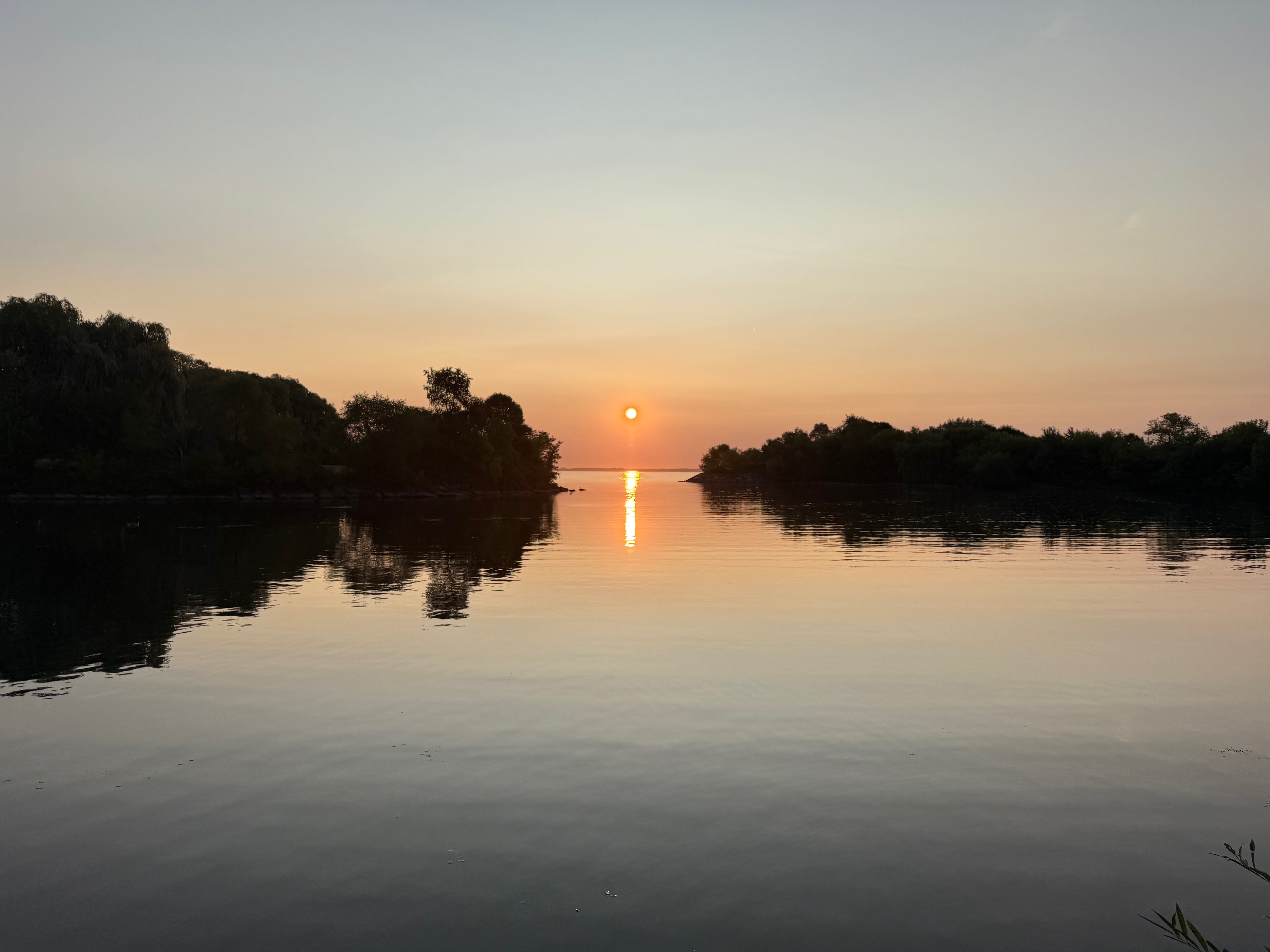
Photo: 5:48 a.m., June solstice, 2021, Toronto
Music and composer’s notes copyright Bruce A. Russell 2025
In August 2024, I recorded an interview with composer and educator Reid Contreras Woelfle for New Music Edmonton‘s The No Normal podcast. Grateful for the chance to expand on where I’m at, four years into this chapter, the rebirth. Available on SoundCloud (see below) and as an Apple podcast.
I’m pleased to announce the completion of a new work for string quartet, ex aliis matres, an autobiographical dedication to my mothers, a thematic embodiment of my origin story and a spiritual sequel to my first quartet, Madra. And I’m very much looking forward to the work’s premiere performance by the musicians who commissioned it, the Isabel String Quartet, in Kingston, Ontario (my birthplace) on February 24, 2025. The concert takes place in the beautiful Isabel Bader Centre for the Performing Arts at Queen’s University. I will be in attendance at the event.
Loss, the multimedia performance in which I acted as composer, music director and pianist/keyboardist in Toronto in June 2023, will return from January 9-11, 2025 at the Apollo Theater, Harlem, New York City, presented by the Apollo in partnership with the Under the Radar Festival. It’s an intimate, multigenerational family story about grief and healing, written by Ian Kamau and his father Roger McTair (1943-2024), and shared live on stage with music, video, sound and lighting design. Created by and for people of African/Caribbean descent, it’s one of the most personally resonant projects I’ve been connected with so far. I’m excited to reunite with Ian and the creative team including my fellow musicians, and to have my performance debut in the US at this historic location and venue. Tickets: https://www.apollotheater.org/event/losshttps://utrfest.org/program/loss
On Thursday, November 14th, I will be part of Artists in Conversation, discussing my piano compositions in person with junctQín keyboard collective‘s Stephanie Chua and Piano Lunaire‘s Adam Sherkin, and listening to them perform solo selections of mine that they are also playing in concerts during November. Questions and input from those in attendance are welcome. Details are below.
Date & Time: Thursday, November 14th, 7:30 pm (doors 7:00 pm) Location: Arraymusic, 155 Walnut Ave, 2nd floor, Toronto Admission: Free Duration: 1 hour Register your attendance in advance: info@pianolunaire.org
Go to my Events page to see the concerts related to this event.
On Sunday, November 10, 2024, Piano Lunaire will give the world concert premiere of For Celine (1995, dedicated to my niece). “Fourths + Fifths” (2012, from Children’s Suite) will also be performed. These two short pieces are part of Composers in Play XII: Still Reeling, an expansive program that highlights world premieres by Charlie Piper, composer and pianist Christopher Mayo, and composer, pianist and Piano Lunaire co-founder Adam Sherkin, as well as music by Allison Cameron, David Sawer and Sean Shepherd. The concert will take place at 3 pm at Arts & Letters Club, Toronto. Doors open at 2:30 pm.
On Saturday, November 23, 2024, the same program will be performed, with songs by Emily Hall sung by Nathaniel Sullivan in place of the Cameron work. This concert will take place at 8pm at the Tenri Cultural Institute, New York City.
I performed For Celine several times in the late 90s in informal settings, always from memory with a variable duration and improvised details. I’m excited to have it played for the first time in its notated form by an expert performer in fine settings. This will also be the first time “Fourths + Fifths” has been performed as a standalone work, and its second appearance on a program since Stephen Clarke premiered the complete Children’s Suite at Arraymusic in 2020.
I’m grateful for the opportunity to have my work presented by Adam and Christopher, two wonderfully accomplished artists.